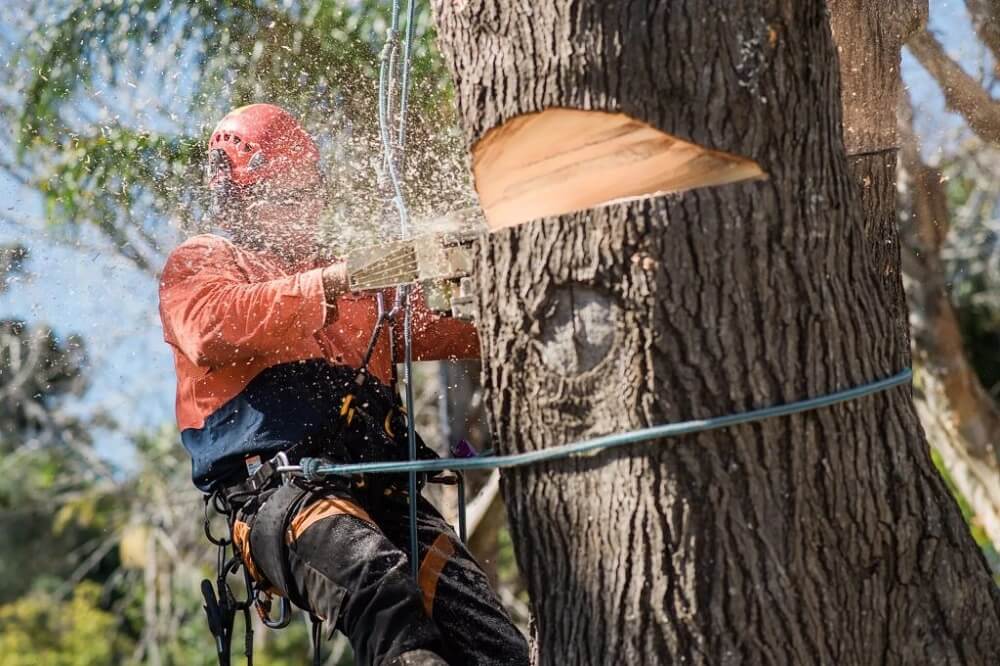
Trees enhance Sydney’s landscape, but they can become liabilities if their health deteriorates. Timely tree removal protects your property, family, and neighbours from preventable accidents. A single falling branch or collapsing trunk can cause significant damage or injuries.
Neglected hazardous trees pose escalating risks that worsen over time. What starts as minor decay can lead to structural failure—especially during Sydney’s storm season—when high winds and heavy rain expose weaknesses. Property owners who delay addressing warning signs often face emergency situations requiring Tree Removal, resulting in costly and urgent intervention.
This guide explores 5 Signs You Need Immediate Sydney Tree Removal Services. Recognizing these indicators early allows you to take proactive action, ensuring tree safety standards while avoiding the dangers of reactive responses. From dead branches to pest infestations, understanding these warning signs empowers you to make informed decisions about when professional Sydney tree removal services become necessary.
1. What Are the Dangers of Dead or Dying Branches?
Dead or dying branches are clear signs that a tree is in decline, indicating that internal decay or disease has affected its vascular system. When branches can no longer transport nutrients and water effectively, they become brittle and unpredictable.
The main concern with dead branches is their tendency to break without warning. A single falling limb can:
- Crush vehicles parked beneath the tree
- Damage roofs, gutters, and outdoor structures
- Cause serious injuries to pedestrians or family members
- Create liability issues for property owners
Specific Risks During Storm Season
Residents of Sydney face particular hazards from falling limbs during the Specific Risks During Storm Season, when strong winds and heavy rain increase the likelihood of branch failure. Dead wood lacks the flexibility of healthy branches, making it more susceptible to snapping under pressure. Even during calm weather, dangers remain—gravity alone can cause weakened branches to detach unexpectedly.
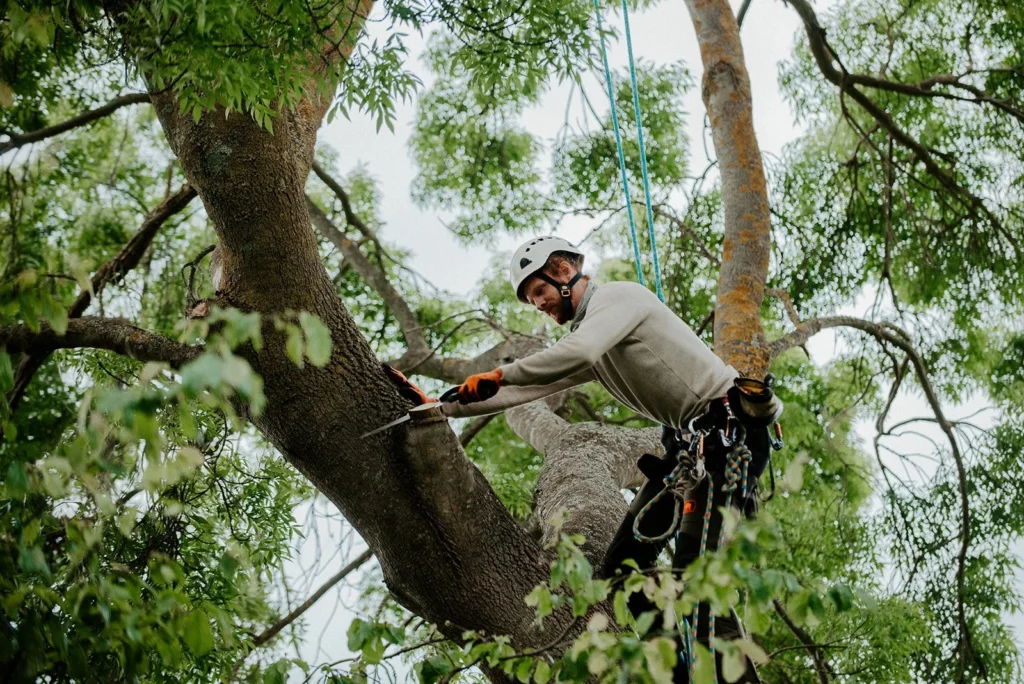
The Importance of Professional Removal
Hiring professionals to remove dead or dying branches eliminates these hazards before accidents happen. Waiting for branches to fall on their own puts everyone at risk and often leads to more costly emergency services and property repairs.
2. How Do Visible Decay and Fungal Growth Indicate Tree Failure?
Fungal growth on trees serves as a visible warning that internal decay has already compromised the tree’s structural integrity. Mushrooms, conks, or bracket fungi appearing on the trunk or base indicate active rot eating away at the wood from within, weakening the tree’s ability to support its own weight.
Tree decay signs become particularly dangerous because the damage occurs internally long before external symptoms appear. A tree may look healthy from the outside while its core has deteriorated significantly, creating a hollow shell that cannot withstand stress.
Storm conditions dramatically increase collapse risk for trees with internal tree damage Sydney residents should never ignore. Wind forces and heavy rain place enormous pressure on already weakened structures, turning compromised trees into immediate hazards.
Professional arborists use specialized tools like resistograph testing to measure internal decay accurately. Visual inspection alone cannot determine the full extent of rot, making expert assessment critical for safety decisions. Certified professionals can identify subtle indicators that untrained eyes miss, preventing catastrophic failures before they occur.
3. Why Are Cracked, Hollow, or Damaged Trunks a Cause for Concern?
Cracked tree trunks on Sydney properties indicate serious structural failures that compromise the entire tree’s ability to bear weight. Deep vertical splits, horizontal cracks, or large cavities create weak points where the trunk can break under its own weight or during moderate winds.
The Dangers of Hollow Trunks
Hollow trunk dangers increase when decay progresses inward, leaving only a thin layer of living tissue. Trees can look healthy while losing up to 70% of their internal structure, giving property owners a false sense of security.
Risks of Structurally Unstable Trees
Trees with visible trunk damage face higher risks of failure because:
- Cracks become deeper during temperature changes and moisture cycles
- Cavities grow larger as decay organisms continue consuming wood tissue
- Split trunks create leverage points that amplify wind forces
- Damaged bark exposes inner wood to further infection and deterioration
The trunk is the main support column of the tree. When it is weakened by cracks or hollowing, the tree becomes unpredictable and can collapse suddenly without any warning signs other than the existing damage.
4. What Does It Mean When a Tree Is Leaning Significantly?
Leaning trees Sydney property owners notice often signal serious underlying problems requiring immediate attention. A tree that suddenly develops a pronounced tilt or increases its lean angle typically suffers from root rot symptoms, soil displacement effects, or structural damage beneath the surface.
Root Rot Symptoms
Root rot occurs when the roots of a tree become infected with fungi, leading to decay and loss of function. This can weaken the tree’s stability and cause it to lean.
Soil Displacement Effects
Soil displacement refers to the movement or shifting of soil around the tree’s root system. This can happen due to construction activities, erosion, or ground movement. When the soil supporting the roots is disturbed, it can destabilize the tree and make it more prone to leaning.
Structural Damage
Structural damage can occur beneath the surface of the tree, affecting its overall integrity. This damage may be caused by pests, diseases, or other factors that compromise the strength of the tree.
The risk intensifies during Sydney’s storm season when:
- High winds exert tremendous force on the leaning canopy
- Saturated soil reduces root grip
- Weight distribution becomes critically unstable
A tree leaning more than 15 degrees from vertical poses imminent danger to nearby structures, vehicles, and pedestrians. Professional arborists use specialized equipment to measure lean angles and assess root plate stability, determining whether emergency removal prevents catastrophic failure.
5. How Can Pest Infestation and Root Damage Trigger Tree Removal?
Pest infestation trees Sydney face can severely compromise their vitality by disrupting nutrient flow and weakening internal structures. Borers, termites, and other destructive insects create tunnels through wood tissue, reducing the tree’s ability to transport water and nutrients while creating hollow sections that diminish structural strength.
Root damage symptoms manifest when disease, construction activities, or soil compaction destroy the underground support system. Damaged roots cannot anchor the tree properly or absorb essential resources, leading to visible decline in canopy health and increased instability. Construction work near trees often severs major roots, leaving the tree vulnerable to toppling.
Compromised tree health from these combined factors creates dangerous conditions:
- Weakened trees become susceptible to sudden failure during wind events
- Pest-hollowed trunks lose load-bearing capacity without external warning signs
- Root system failure eliminates the tree’s foundation, making collapse imminent
Immediate removal becomes necessary when infestations spread beyond treatment or when root damage exceeds 30% of the root zone. Professional arborists assess whether the tree poses an unacceptable risk to nearby structures and people.
When Should Trees Interfering With Infrastructure Be Removed?
Trees near power lines Sydney properties require immediate attention when branches grow within striking distance of electrical cables. Contact between tree limbs and power lines creates electrocution hazards, fire risks, and potential power outages affecting entire neighborhoods. Sydney councils mandate specific clearance zones around electrical infrastructure, making removal legally required in many cases.
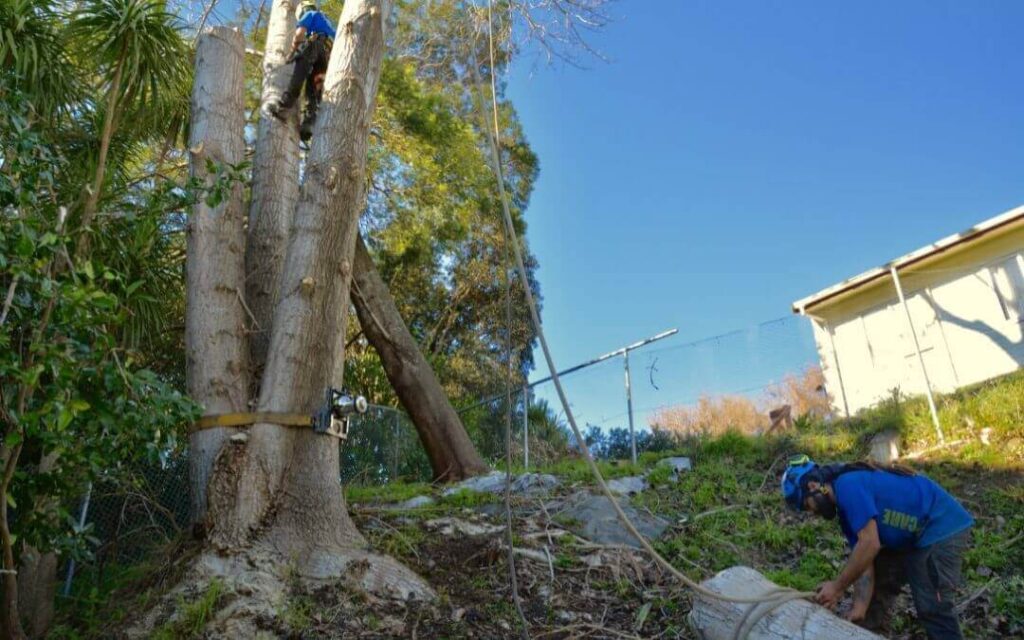
Root damage buildings face occurs when aggressive tree root systems infiltrate foundations, cracking concrete slabs and destabilizing structural supports. Underground roots seeking moisture often invade:
- Sewer and stormwater pipes, causing blockages and costly repairs
- Building foundations, creating settlement issues and structural cracks
- Driveways and pathways, lifting pavement and creating trip hazards
Council regulations tree removal in Sydney specify strict guidelines for trees threatening infrastructure. Property owners must obtain permits before removing protected trees, yet exemptions exist for hazardous situations. Trees compromising essential services or posing immediate danger to structures qualify for expedited removal under emergency provisions, protecting both property and public safety.
How Do Certified Arborists Determine the Need for Immediate Removal?
What methods do professionals use to assess tree hazards?
A certified arborist Sydney uses a combination of systematic visual inspection techniques and advanced diagnostic equipment to identify structural weaknesses and health issues. During a professional tree inspection, arborists check the condition of the bark, attachment points of branches, integrity of the root collar, and look for any signs of pest activity or disease progression.
Which criteria determine removal urgency?
Arborists consider various risk factors such as how close the tree is to busy areas, the likelihood of it falling during typical weather events, and its ability to withstand strong winds. They also use tree health assessment tools like resistograph testing to measure the density of the wood inside and sonic tomography to find hidden decay cavities that could affect stability.
Why choose professional evaluation over self-assessment?
Certified professionals are familiar with Sydney council regulations regarding hazardous vegetation and can provide documented assessments that meet insurance and legal requirements. Their expertise helps avoid unnecessary removal of trees that can be saved while ensuring that truly dangerous ones get immediate attention, thus protecting property values and public safety through recommendations based on evidence.
Conclusion
Knowing the 5 Signs You Need Immediate Sydney Tree Removal Services helps protect your property and everyone around it. Dead branches, visible decay, trunk damage, leaning trees, and pest infestations all require quick action from qualified professionals who understand property safety trees Sydney regulations.
Delaying action on hazardous trees increases the risk of property damage, personal injury, and expensive emergencies. Certified arborists have the expertise to accurately assess tree conditions and carry out safe removal procedures that follow local council requirements.
If you see any of the warning signs mentioned in this guide, contact urgent Sydney tree removal services right away. Professional help ensures your property stays safe while meeting Sydney’s tree management standards.
To learn more click here: What Makes a Certified Arborist Sydney Essential for Property Care